

Introduction
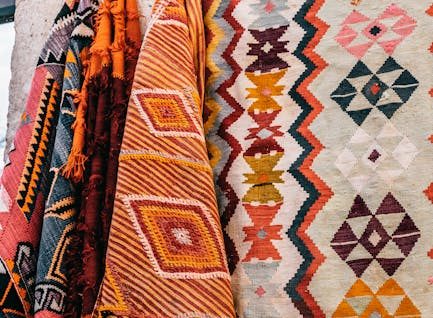
Welcome to a colorful journey through the intricate world of traditional Turkish weavings! These textiles are not just fabrics; they are storied pieces of art, steeped in history and bursting with cultural significance. From the vibrant kilim rugs to the exquisitely woven Turkish carpets, each piece tells a tale of ancient craftsmanship and communal heritage. In this blog, we’ll explore how these beautiful creations are made, their historical context, and why they continue to be a sustainable choice in our modern world. Join us as we unravel the threads of Turkish weaving traditions and discover their enduring appeal and significance.

History of Turkish Weavings
The rich tapestry of Turkish weavings is woven deep into the cultural fabric of the country, representing a crucial part of its artistic and economic history. The tradition, dating back to at least the Seljuk period in the 12th century, showcases a technical prowess in textile production that has evolved through the centuries. Anatolian lands, marked by their crossroads between East and West, became melting pots of cultures, each influencing the motifs and techniques of Turkish textile arts.
Evolution of Traditional Turkish Weavings
Turkish weavings have undergone significant transformations from their primitive origins to their current forms as cherished global artifacts. In the beginning, nomadic tribes crafted simple, functional pieces for personal use, often from wool shorn from their own herds. These tribes people were the originators of the kilim rug, distinguished by its flat-weaving technique that does not involve knotting but instead interweaving threads tightly. As the Ottoman Empire expanded, the complexity and variety of designs expanded too. The introduction of the Turkish knot or Ghiordes knot revolutionized the creation of carpets, making them denser and more durable, suitable not just for local consumption, but also for trade and royal commissions. Over time, cities like Hereke became renowned for their finely woven silk carpets, which were often gifted to royalty and foreign dignitaries.
Cultural Significance of Turkish Carpets and Kilim Rugs
Turkish carpets and kilim rugs are much more than mere decorative items; they are narrative pieces that carry the stories, beliefs, and traditions of the people who make them. Every motif woven into a Turkish carpet holds meaning, from the protection-seeking ‘evil eye’ to various geometric representations of natural elements which symbolize fertility, joy, and safety. They play a vital role in significant life events such as births, weddings, and funerals, encapsulating blessings and prayers for the users. During religious ceremonies, carpets and rugs take on a spiritual significance, both as practical items and symbolic offerings. These pieces are also expressions of personal and communal identity, often specific to regions or tribes, with distinct colors, patterns, and weaving styles.
Sustainable Weaving Practices in Turkey
In recent times, there has been a noteworthy pivot towards sustainable weaving practices in Turkey, as artisans and companies alike recognize the importance of preserving both their cultural heritage and the environment. This shift not only supports ecological balance but also promotes the longevity and reverence of traditional Turkish weaving crafts in modern times.
Organic Materials Used in Turkish Weavings
Traditionally, Turkish weavings were made from locally-sourced materials like wool, cotton, and silk, which were inherently sustainable due to their natural origins and biodegradable properties. Today, many weavers continue to use organic versions of these materials, which are grown without harmful pesticides and chemicals. Natural dyes, made from plant extracts, minerals, and other organic compounds, are also making a comeback. These dyes are not only environmentally friendly but also add a unique vibrancy and depth of color to the carpets that cannot be replicated by synthetic alternatives. Materials such as organic wool and vegetal dyes ensure that the rugs are safe and sustainable, from creation to disposal.
Fair Trade Principles in Turkish Weaving Industry
The application of fair trade principles in the Turkish weaving industry is crucial in ensuring that the artisans who dedicate their lives to this craft are treated with respect and equity. This encompasses fair wages, safe working conditions, and a guaranteed market for their products. Fair trade also empowers communities through additional investments in local infrastructure, education, and healthcare. By adhering to these principles, businesses help preserve traditional crafts and create a sustainable economic model where local culture and individual welfare can flourish.
Impact of Sustainable Weaving on Environment
The impact of sustainable weaving practices on the environment is profound. By using organic materials and natural dyes, Turkish weavers significantly reduce the release of toxic chemicals into water sources, soil, and the air, which are often byproducts of synthetic dye processing. Sustainable practices also promote biodiversity as organic farming for natural fibers and dyes depends on a healthier ecosystem. Furthermore, by focusing on high-quality, durable design, sustainable Turkish carpets and kilims promote a culture of longevity and value over disposable consumerism. This approach not only helps in waste reduction but also educates the market on the benefits of investing in eco-friendly and ethically made products, influencing global markets towards greener choices.
Traditional Craftsmanship in Turkish Weavings
The art of Turkish weavings, including carpets and kilim rugs, is steeped in history and showcases a dazzling array of techniques and patterns that have been passed down through generations. Traditional Turkish weavings are not only functional items but are also significant cultural symbols that reflect the socio-economic and cultural dynamics of their times.
Techniques Used in Creating Turkish Carpets and Kilim Rugs
Turkish weavings are renowned for their sophisticated techniques and exquisite designs, with each region of Turkey offering its unique style and pattern. Here are some of the key techniques involved in creating these masterful artworks:
– Hand Knotting:
The most traditional and labor-intensive method, hand knotting involves tying thousands of knots to create intricate patterns and dense, durable carpets. The double-knot technique, also known as the Turkish or Ghiordes knot, is particularly notable for its strength and is a hallmark of Turkish craftsmanship.
– Flat Weaving:
This technique is primarily used in making kilim rugs. Unlike knotted rugs, flat-woven kilims are made by interweaving variously colored wefts and warps, creating a flat surface without a pile. This method allows for bold, geometric patterns and is faster than knotting, though no less skillful.
– Dyeing:
Traditional Turkish weavings are famous for their vibrant colors, derived from natural dyes. Ingredients such as indigo, cochineal, walnut shells, and various plant extracts are used to produce a wide range of colors that have symbolic meanings and are resistant to fading.
These techniques are not just methods of crafting textiles but are a testament to the region’s commitment to beauty, precision, and durability in fabric artistry.
Role of Artisans in Preserving Traditional Weaving Methods
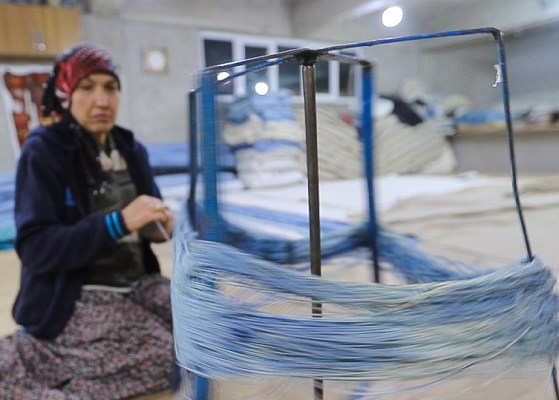
Artisans are the custodians of the weaving traditions in Turkey. Their role extends beyond merely creating rugs and carpets; they are the bearers of their community’s cultural identity and history. Here’s how they contribute to preserving these age-old methods:
– Mentorship and Apprenticeship Programs:
Many weaving skills are taught through direct mentorship, with knowledge passed from one generation to the next. Young artisans often start learning the basics of weaving under the guidance of experienced elders in their community.
– Workshops and Cooperatives:
Several regions have established weaving cooperatives where artisans can work together, share resources, and keep their traditions alive. These cooperatives play a vital role in the economic sustainability of the artisans and help maintain the relevance of weaving in modern society.
– Innovation Within Tradition:
While staying true to traditional methods, artisans also innovate by integrating contemporary designs and adapting to new market demands. This creative adaptation ensures that traditional weaving remains relevant and appealing in today’s global marketplace.
Through their dedication and skill, Turkish artisans not only preserve ancient weaving techniques but also ensure that these traditions continue to thrive and inspire both within Turkey and around the world. Their work is a vibrant narrative woven into the very fabric of their culture, telling stories of history, identity, and continuity.
Conclusion
Turkey’s traditional weavings are not just a craft but a vivid portrayal of the nation’s cultural and historical tapestry. Each strand and color in Turkish rugs and kilims tells a story, echoing centuries of artisanal skills passed down through generations. These weavings do more than just adorn homes; they carry the essence of sustainable craftsmanship and cultural identity. By choosing to incorporate a Turkish carpet into your space, you are not only enhancing your home décor but also preserving and participating in a rich, historical tradition. Embrace the beauty and timelessness of Turkish weavings to add a unique touch to your living spaces while supporting a formative cultural masterpiece that has withstood the tests of time.